A Peaceful Welcome: Bringing a New Dog Home to Other Pets Provided by Jessica Turquette, owner of Moab BARKery
iStock credit : CBCK-Christine
Start Before the Homecoming
Bringing home a new dog is exciting, but the first meeting should not be treated like a surprise party. Resident animals may see the newcomer as a negative change to their territory, routine, or access to valued resources. Before arrival day, schedule a veterinary check for the new dog and confirm vaccinations, parasite prevention, and any health restrictions. Ask the shelter, rescue, breeder, or former caregiver about the dog’s history with other animals, play style, fears, and guarding behavior. Then prepare separate areas with beds, water, food, toys, and a secure retreat for every pet. Baby gates, closed doors, crates used positively, and leashes can help you manage contact without forcing interaction.
Make the First Meeting Calm
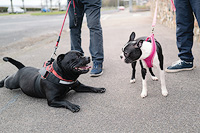
If the resident pet is another dog, begin outdoors in a quiet, neutral place rather than at the front door or beside a favorite toy. Use two calm adults, one dog per handler, with standard leashes that do not retract. Start with a parallel walk several yards apart. Reward relaxed glances, loose bodies, and attention to the handler. Gradually reduce the distance only while both dogs remain comfortable. Brief sniffing can follow, then another short walk. Avoid tightening the leashes or pushing the dogs face to face; both can add pressure. If the outdoor meeting stays calm, enter the home together after removing food bowls, chews, and especially valuable toys. Keep the first indoor visit short and supervised. Separate the dogs for rest before either becomes tired or overstimulated.
Read the Animals, Not the Clock
There is no universal timetable. Some pets settle within days; others need weeks or longer. Let the most cautious animal set the pace. Encouraging signs include soft eyes, a loose body, curved approaches, play bows, easy disengagement, normal eating, and the ability to rest. Slow down if you see freezing, prolonged staring, tucked posture, repeated hiding, raised hackles, lip lifting, growling, lunging, stalking, or frantic pursuit. A growl is useful information, not disobedience; do not punish it. Calmly increase distance, use a barrier, and return to an easier step. Repeated conflict, any bite, or behavior that feels unsafe calls for prompt advice from a veterinarian or qualified behavior professional.
iStock credit : Petra Richli
When the Resident Pet Is a Cat
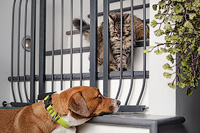
Give the cat a room that the dog cannot enter at first, complete with food, water, litter box, hiding places, scratching surfaces, and elevated perches. Begin with scent: exchange bedding or gently rub each animal with a separate cloth and place it near the other pet’s space. Next, allow them to investigate opposite sides of a closed door. When both remain calm, progress to visual contact through a tall gate, screen, or slightly opened secured door. Keep the dog leashed and reward calm attention and turning away. The cat should always control distance and have an escape route the dog cannot access. Never hold the cat near the dog, allow chasing “just once,” or leave them together unsupervised until a long pattern of calm behavior is established. Some homes may always require separation when people are away.
Protect Small Pets and Birds
Rabbits, guinea pigs, hamsters, reptiles, and birds can trigger predatory interest even in a friendly dog. House them in sturdy enclosures that prevent escape inside a room the dog cannot enter freely. Do not rely on a cage alone; pawing, barking, staring, or circling can be frightening and may tip or damage an enclosure. Introductions, if appropriate at all, should occur from a substantial distance with the dog leashed and under adult control. Reward the dog for looking away and settling. For many pairings, peaceful coexistence means permanent physical separation rather than direct contact. iStock credit : Arf & Wag Studio. Getty Images
Manage Resources and Preserve Routine
Feed pets in separate spaces and pick up bowls afterward. Offer chews and favorite toys only when animals are apart until you understand everyone’s behavior. Provide more resting places, water stations, and litter boxes than the household strictly needs so no pet must compete. Continue the resident pet’s familiar walks, meals, play, and individual attention; predictability reduces stress. Give the newcomer quiet time, too. Constant interaction can be exhausting, especially after travel or a shelter stay. Use gates and rotation schedules proactively rather than waiting for trouble. During early weeks, an adult should actively supervise shared time rather than simply be in the same building.
The First Week Checklist
• Keep sessions brief: End while everyone is still successful.
• Reward calm choices: Use praise, treats, play, or distance, depending on what each animal values.
• Separate when unsupervised: Prevent rehearsals of chasing, guarding, or intimidation.
• Protect individual needs: Maintain safe retreats, sleep, exercise, and private feeding.
• Record patterns: Note triggers, distance, duration, and recovery after stressful moments.
Know When to Ask for Help
Contact your veterinarian before introductions if any pet is ill, in pain, very young, elderly, or has a history of aggression or extreme fear. Seek professional help promptly for bites, escalating fights, persistent chasing, guarding that limits normal household life, or a pet that stops eating or using the litter box. Above all, measure success realistically. The goal does not have to be instant friendship. Calm, safe coexistence built through patience, choice, and careful management is an excellent beginning.
Dog-Friendly Walks/Hikes
in the Moab Area
Corona Arch - Easy/Moderate. 1.3 Miles one way. Trailhead is 25 minute drive from Moab.
North on US-191 to Potash Road (Utah 279).
Mill Creek Pathway - Easy. 1.1 Miles. Little to no driving. Starts at the intersection of 100 South and 100 West,
a block off of Main Street.
Portal Overlook - Hard. 2.0 Miles one way. Trailhead is 20 minute drive from Moab.
North on US-191 to Potash Road (Utah 279).
Grandstaff Canyon - Moderate. 2.0 Miles one way. Trailhead is 10-minute drive from Moab.
North on US-191 to the River Road (Utah 128)
Dog Friendly Walks/Hikes in the Moab Area
Trail or Walk
Difficulty
Length
(one way)
Proximity to Downtown
MillCreek Pathway
easy
1.1 miles
Little to no driving
Starts at 100 S & 100 W
Portal Overlook
(trailhead @ Jaycee Park)
Hard
2.0 miles
25 min drive N on US-191 to W on Utah 279 (4.2 miles)
Moab Rim
Hard
3.0 miles
(to Hidden Valley trail)
8 minute drive
2.6 miles down Kane Creek Blvd from US-191
Negro Bill Canyon
(aka William Grandstaff Canyon)
Moderate
2.0 miles
10 minute drive N on US-191 to
W on Utah 128, 3 miles
Hunter Canyon
Easy
2.0 miles
25 minute drive (mild off-road)
7.5 miles down Kane Creek Blvd from US-191
Corona Arch Trail
Easy/Moderate
1.5 miles
25 minute drive N on US-191 to
W Utah 279 (10 miles)
Hidden Valley
(trailhead at end of Angel Rock Rd)
Hard
2.0 miles
10 minute drive
S on US-191
3 miles to Angel Rock Rd
Fisher Towers
(trailhead 2.2 miles off Utah 128)
Moderate
2.2 miles
35 minute drive N on US-191 to Utah 128, then 21 miles
Tips for enjoying your time with your dog here in the Moab area:
Bring lots of extra water for you and your dog.1 gallon per day for every 60lbs of dog!!
Don’t let dogs chase wildlife (especially coyotes, they can lead dogs into an ambush).
In the city, dogs are required to be leashed, but on public lands off leash with voice control is allowed.
Slickrock and sand is very abrasive! Check paw pads often, or buy and use booties.
If it’s over 85 degrees only consider early AM or late PM hikes, daycare or leave your dog at home.
Pack out my poop! Seriously or the other hikers without dogs will eventually demand no dogs allowed!
To see past articles about animals, pets and their care check ourarchives.