 The autumnal equinox, when the sun shines directly overhead at the equator and when day and night are each about 12 hours long, occurred on September 23 this year, and also marked the start of the fall season – sometimes known as Leaf Peeper Season - in the Northern Hemisphere.
Though no one could feel the tilt of the earth’s axis at 23.5 degrees at this time, if you took cardinal directions of the rising and setting sun, those positions would represent due east and due west, respectively.
This transition of summer into fall doesn’t often result in a dramatic drop in temperature; however, the slight cooling that starts in October is a signal that the brutal heat of summer is about to fade into just memories. Nighttime temperatures, even into the low and mid 60s Fahrenheit, represents a welcomed transitional period.
Don’t mistake these temperature drops to mean winter is on its way. There are still plenty of sunny days ahead; it’s the tease of cooler weather that is so enticing.
Along with cooler weather comes the gradual transition of color from the mountains down to the canyons. Though this autumn fall foliage change won’t rival the spectacular fall foliage colors of New England or the Midwest thanks to the diversity of deciduous hardwood forests there, but it does provide for a stunning “Kodachrome moment” as aspen forests turn golden in the fall.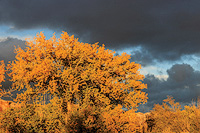
Sunlight, temperatures, and moisture all play a role in the life cycle of a leaf as it passes from summer’s productivity into its autumnal senescence. The decline of available sunlight starts this aging process with the pigments responsible for photosynthesis – primarily chlorophyll – to unmask or produce other pigments within the leaves. These pigments, carotenoids and anthocyanins, become unmasked and create yellow or reddish colors, respectively also play roles in the photosynthetic process.
The result of all these cellular changes is the eye-popping “leaf peeping” season.
Getting out into the wilds to view this spectacular foliage event is an easy endeavor, ranging from a scenic drive or a hike into the mountains or canyons.
From Moab, the La Sal Mountain Loop Road traverses along the western side of the range – once named the Sierra de la Sals by the Dominguez-Escalante expedition in 1776. Approximately 60 miles long, this scenic drive through the La Sal National Forest, takes one up through pinyon-juniper woodlands into the mixed coniferous and aspen forests that cloak the mountains. Along the drive, there may be various shrubs such as serviceberry, skunkbush or three-lobed sumac which is known for its aromatic crushed leaves and sticky red berries, or wild rose dotting the landscape with yellow or reddish leaves indicating that fall has arrived.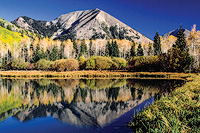
Continuing up the road through the pinion-juniper, one encounters stunted oak groves mixed with shrubs and grasses. These gambel’s oaks produce acorns which Stellar’s jays and wild turkeys feast upon. The leaves on these gnarled trees turn a variety of colors from red to purplish brown, and as the leaves age, some remain attached to the twigs throughout the winter season.
But the goal on this mountain drive lies at the ends of the campground-accessing roads to Warner Lake and Oowah Lake, or Gold Basin named for the mineral not the fall foliage. Here groves of aspen turn a brilliant golden in the fall, and a careful survey of the leaves may turn up a few that are reddish orange in color. An autumn stroll through these woods may also turn up other gems: mule deer, elk, bear, songbirds, raptors, and the sharp “Eenk!” call of an American pika.
A couple of other worthy mentions which are more hiking than driving includes Courthouse Wash in Arches National Park and the Wooden Shoe Canyon–Lost Canyon loop hike in Canyonlands National Park. In these canyons, willows and Fremont cottonwood produce golden-yellow leaves which are in sharp contrast to the redrock canyon walls.
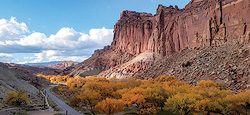
For a scenic drive that will wow you with stunning cottonwood displays, follow the River Road (Highway 128) upstream from Moab or take a day road trip drive on Highway 24 through Capitol Reef National Park. Just remember to use the pullouts, instead of stopping on the roadway, to enjoy the leaf-peeping show.

 A natural history writer.
